
细胞生物学_Membrane Structure
基础
fluid-mosaic model 液态镶嵌模型
lipid rafts model 脂筏模型
liposome 脂质体,人造的双分子层,可以用于药物传递
总览👇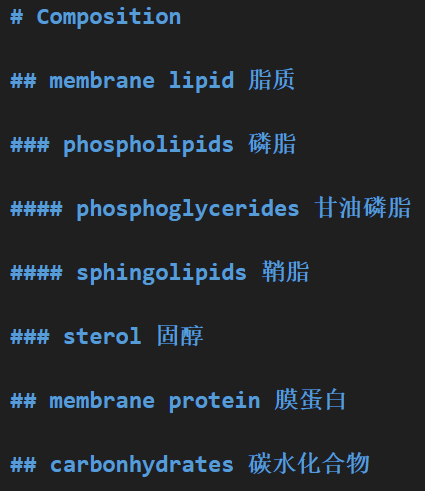
Composition
membrane lipid 脂质
lipid bilayer 磷脂双分子层
phospholipids 磷脂
phosphoglycerides 甘油磷脂
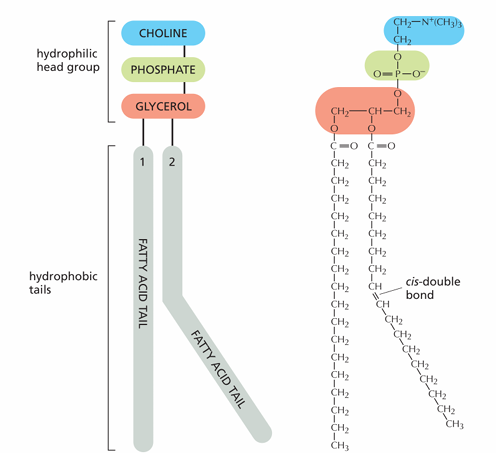
甘油👇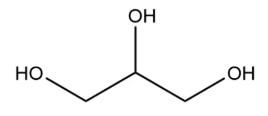
sphingolipids 鞘脂
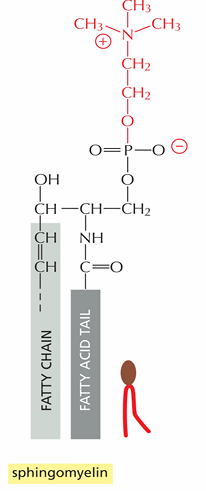
sphingosine (鞘氨醇)👇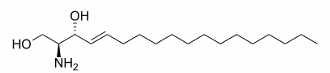
sterol 固醇
主要说说cholesterol胆固醇
cholesterol胆固醇 composes about 30% of all animal cell
membranes.
containing a rigid ring (甾环) attached to a single polar hydroxyl group and a short nonpolar hydrocarbon chain
胆固醇结构👇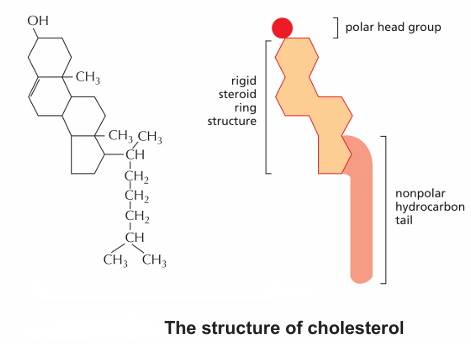
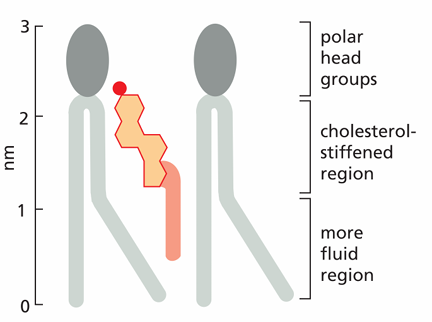
胆固醇orient themselves in the bilayer with their hydroxyl group close to the polar head groups of adjacent phospholipid molecules
Alters membrane fluidity and strengthen the bilayer
Reduces the permeability通透性 of the plasma membrane to neutral solutes中性溶质, hydrogen ions, and sodium ions
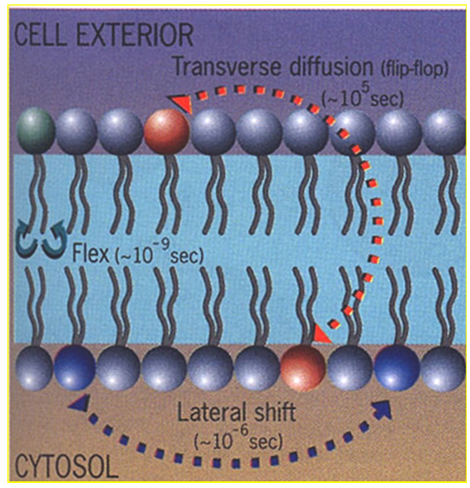
movement of lipid
- Lateral diffusion (沿膜平面侧向运动,基本运动方式)
- Rotation around its long axis (绕轴心的自旋运动)
- Flexion (脂分子的尾部摆动)
- Transverse diffusion, or “flip-flop” (双层脂分子间的翻转运动) Flippases翻转酶 catalyze the flip-flop
membrane protein 膜蛋白
amphiphatic 偶极性,一边亲水一遍疏水
可以分为三种
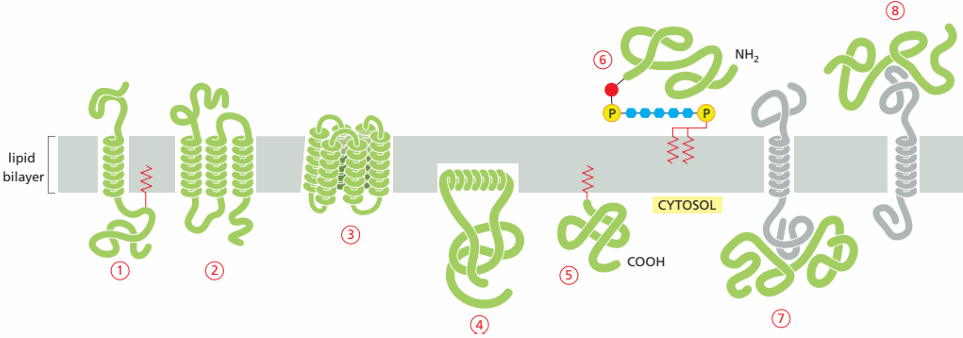
Integral membrane protein整合膜蛋白 extend across the bilayer
①a single α helix ② multiple α helices ③ a β barrelLipid-anchored membrane proteins脂锚定蛋白 are distinguished both by the types of lipid anchor and their
orientation
The inner leaflet: ④ an amphiphilic α helix or ⑤ a covalently bound lipid chain
The outer leaflet: ⑥ Glycophosphatidylinositol (GPI)-linked proteins (the outer leaflet)Peripheral / Extrinsic membrane proteins外固膜蛋白 are attached to the membrane by weak noncovalent
interactions. ⑦⑧
carbonhydrates 碳水化合物
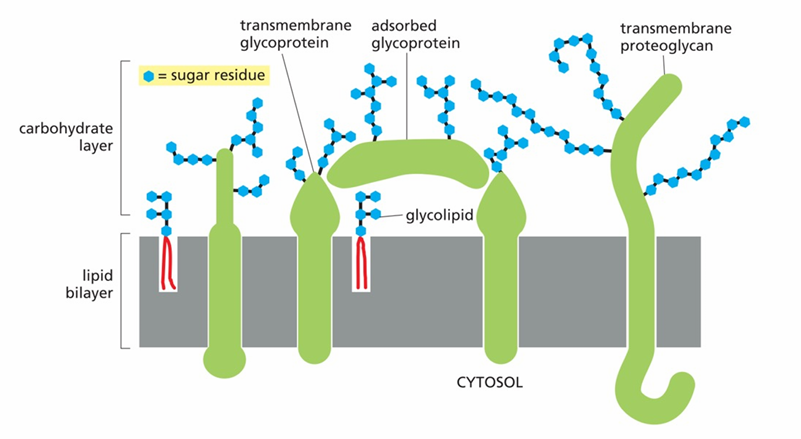
不论是连接脂质还是蛋白的糖都在膜的外侧,where it forms a sugar coating called glycocalyx糖包被
function
The glycocalyx helps to protect the cell surface from mechanical and chemical damage.免受机械/化学损伤
Membrane carbohydrate has an important role in cell-cell recognition and adhesion.识别/吸附
The glycocalyx can serve as a kind of distinctive clothing.
Properties of the Membrane
Membrane Fluid
影响因素
- temperature
- saturation饱和度 of fatty acids
Membrane Asymmetry
脂质分布是不对称的
the inner (cytoplasmic) leaflet is composed most of PE(磷脂酰乙醇胺) and PS(磷脂酰丝氨酸)
the outer (extracellular) leaflet is based on PC(卵磷脂), sphingomyelin (鞘磷脂)
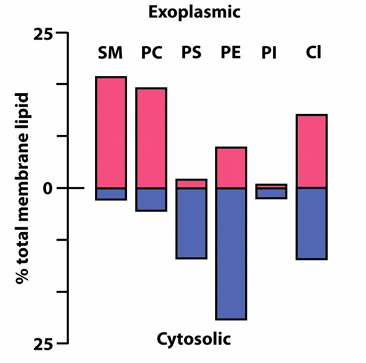
Lipid asymmetry gives the membrane leaflets小叶 different physical and chemical properties appropriate for the different interactions occurring at the two membrane faces
Integral proteins attach to the bilayer asymmetrically, giving the membrane a distinct sidedness
The membrane carbohydrates only distributing on extracellular side
Membrane Associated Cytoskeleton
膜相关细胞骨架
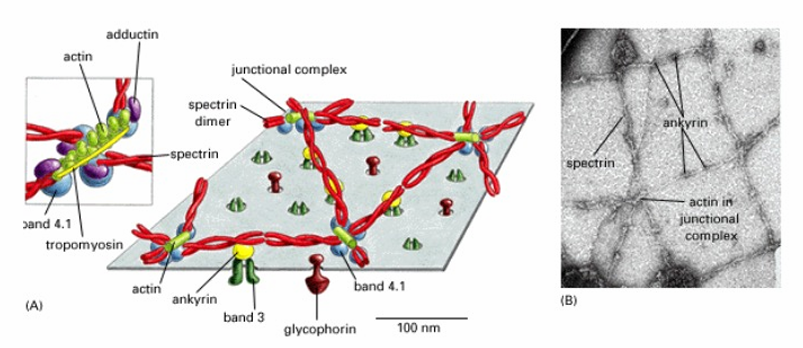
the membrane skeleton is mostly associated with actin, it is called actin-based membrane skeleton
The components of membrane protein skeleton include spectrin (血影蛋白), actin (肌动蛋白), ankyrin(锚蛋白) and band 4.1 protein.
Function of the Membrane
- PM define the boundaries of the cell and organelles.
- Compartmentalization: membranes formcontinuous sheets that enclose intracellular compartments.
- Transporting solutes: membrane proteins facilitate the movement of substances between compartments.
- Responding to external signals: membrane receptors transduce signals from outside thecell in response to specific ligands.
- Intercellular interaction: membrane mediate recognition and interaction between adjacent cells by cell-to-cell communication and junction.
- Locus for biochemical activities: membrane provide a scaffold that organizes enzymes for effective interaction.
- Energy transduction: membranes transduce photosynthetic energy , convert chemical energy to ATP, and store energy in ion and solute gradients